Blog navigation

Latest posts

VIAVI ALT-9000: Precision Testing for Modern Radio Altimeters
0 views

The VIAVI ALT-9000 enables reproducible testing of modern radio altimeters using precise RF time delay and path loss...

View full article
MIL-STD-461H RS103: 30-200 MHz EMC testing with ETS-Lindgren 3170
23 views

MIL-STD-461H increases the focus on stable and reproducible RS103 testing in the 30-200 MHz range. The ETS-Lindgren...

View full article
VIAVI CX300 Software Update 3.0.1 for professional radio service
60 views

Software Release 3.0.1 is available for the VIAVI CX300 Communications Service Monitor. The update adds functions for...

View full article
Wavecontrol Webinar: Control Center for Continuous EMF Area Monitoring
99 views

On July 9, 2026, Wavecontrol will present an international live webinar on a web-based Control Center for Continuous...

View full article
EMCTEST at EMCO: EMC test accessories for the DACH region
112 views

EMCO Elektronik is the official distribution partner of EMCTEST Technologies Srls for Germany, Austria and...

View full article

VIAVI ALT-9000: Precision Testing for Modern Radio Altimeters

0 Views
 

VIAVI ALT-9000: Präzise Prüfung moderner Radarhöhenmesser

Precise radio altimeter testing under controlled conditions

Radio altimeters are an essential part of modern avionics systems. Maintenance and troubleshooting require more than verification of the transmitter and receiver functions. The response of the complete system to defined signal delays and signal losses must also be assessed.

The VIAVI ALT-9000 Radio Altimeter Test Set generates reproducible altitude conditions using precise RF time delay and controlled path loss modelling. Radio altimeter systems can therefore be tested under defined ground-based conditions without requiring a flight test for every measurement.

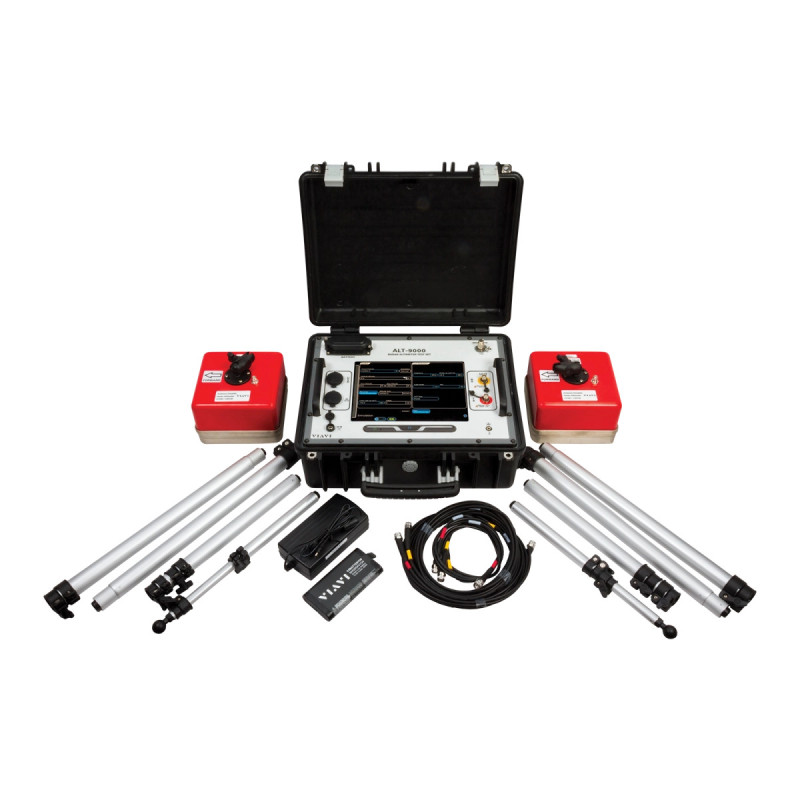
VIAVI ALT-9000 Radio Altimeter Test Set with accessories

Technical context: simulating altitude through RF time delay

A radio altimeter determines height above ground from the propagation time of the transmitted and reflected RF signal. A test system must reproduce this delay so that the connected radio altimeter detects a defined altitude.

The ALT-9000 uses an optical fibre-based delay technology for this purpose. In addition to propagation delay, the signal loss of the transmission path is modelled. This enables the response of the radio altimeter to specified simulated altitudes to be evaluated under repeatable conditions.

The simulated altitude range extends from 5 ft to 10,000 ft. An optional extension increases the test capability to 25,000 ft. The system can therefore address different requirements within maintenance and diagnostic environments.

Support for conventional and modern radio altimeter architectures

Existing aircraft platforms use different generations and signal architectures of radio altimeters. A maintenance system must therefore be able to address more than one equipment generation or modulation format.

The ALT-9000 supports both conventional radio altimeter systems and next-generation architectures. The provided information specifically identifies the following system types:

  • Conventional radio altimeters: Testing of established radio altimeter architectures under controlled conditions.
  • Low Probability of Intercept: Support for LPI systems using adapted signal formats.
  • Combined Altitude Radar Altimeter: Support for CARA system architectures.
  • Next-generation radio altimeters: Assessment of modern system variants within the same maintenance and diagnostic workflow.

This broad system coverage is particularly relevant for maintenance organisations supporting different aircraft types, equipment generations or avionics configurations with a common test platform.

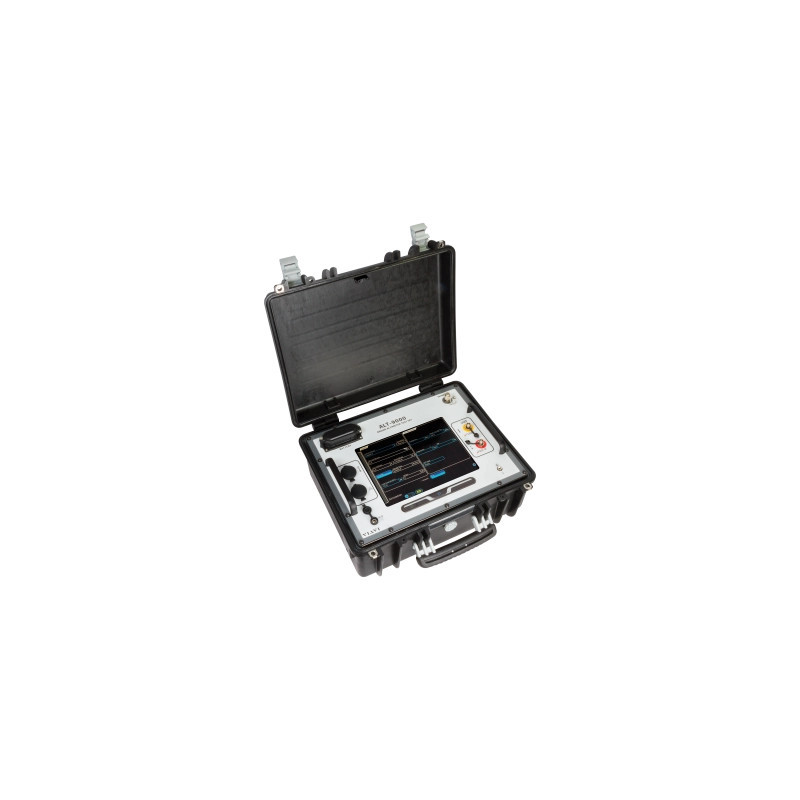
Portable VIAVI ALT-9000 Radio Altimeter Test Set

Parametric analysis of the transmitted signal

In addition to altitude simulation, the ALT-9000 provides measurement functions for important radio altimeter signal parameters. Results are displayed through the graphical touchscreen interface.

The parameters identified in the supplied document include:

  • Tx Power: Assessment of the RF power generated by the radio altimeter.
  • Tx Frequency: Verification of the transmitted frequency.
  • FM Deviation: Analysis of frequency deviation for frequency-modulated signals.
  • Sweep Rate: Assessment of the rate at which the transmitted frequency changes.
  • PRF: Analysis of Pulse Repetition Frequency for applicable signal architectures.

The combination of altitude simulation and parametric measurement supports more detailed troubleshooting. It helps determine whether a deviation is related to RF power, frequency generation, modulation characteristics or the system response to the simulated propagation delay.

Reproducible testing for line and base maintenance

The ALT-9000 is designed as a portable and rugged test platform for different maintenance environments. It can be used for both line maintenance activities and base maintenance or workshop applications.

Battery operation enables measurements where an immediate mains power connection is not available. Combined with the touchscreen interface, this supports rapid deployment at the aircraft or at a prepared maintenance position.

  • Mobile troubleshooting: Testing radio altimeters during aircraft maintenance activities.
  • Workshop testing: Reproducible assessment of removed or separately accessible systems.
  • Functional verification: Simulation of defined altitude conditions following maintenance or repair work.
  • Comparative measurements: Repeatable tests for investigating intermittent or difficult-to-reproduce faults.

Defined and repeatable test conditions make it easier to compare results from different maintenance stages. This can support fault diagnosis and reduce unnecessary repetition of test procedures.

Technical relevance for efficient maintenance workflows

Flight tests involve significant operational and organisational effort. The ALT-9000 enables a substantial part of radio altimeter testing to be performed under controlled ground-based conditions.

Precise delay and loss simulation supports systematic investigation of system faults. At the same time, measured transmitter parameters can be included directly in the diagnostic process. This creates a structured test workflow that considers both the system response and relevant RF parameters.

For technical maintenance teams, this provides better comparability of results and more diagnostic information than a basic functional check without defined altitude and signal conditions.

Assessment of modern interference scenarios

As adjacent frequency ranges become more intensively used, potential interactions between communication systems and avionics receivers require increasing attention. The supplied information also positions the ALT-9000 in relation to the assessment of modern interference scenarios and new frequency environments in the 5G context.

A technically meaningful investigation must consider the specific radio altimeter, its signal architecture, the installation environment and the applicable test method. Detailed frequency masks, interference profiles and acceptance criteria are not specified in the provided information.

Before defining the test setup, users should therefore determine which interference scenarios must be simulated and which additional signal sources, couplers or measurement components may be required.

Selection criteria for maintenance and system integration

Technical evaluation of the ALT-9000 should consider the existing radio altimeter architecture, the required altitude range and the intended operating environment.

  • System architecture: Determine whether a conventional, LPI, CARA or next-generation system must be tested.
  • Altitude range: Assess whether the standard range up to 10,000 ft is sufficient or whether the extension to 25,000 ft is required.
  • Measurement parameters: Define which transmitter and modulation parameters are relevant for maintenance and diagnosis.
  • Test environment: Select between mobile use, line maintenance, base maintenance and stationary workshop testing.
  • RF coupling: Adapt the test setup to the installed system, available cabling and intended RF coupling method.
  • Interference testing: Define the required 5G or other interference scenarios and the additional components needed to generate them.

The exact delivery scope, interface configuration and detailed procedures for specific interference tests are not fully described in the provided information and must be clarified for the individual project.

EMCO supports technical product selection

EMCO Elektronik is a VIAVI Platinum Partner in Germany and a VIAVI Solutions contact for customers in Germany, Austria and Switzerland.

EMCO supports customers in evaluating how the ALT-9000 fits into existing avionics maintenance processes, selecting the required altitude range and identifying the radio altimeter architecture to be tested. The intended field or workshop use and the requirements for RF coupling can also be considered.

This application-oriented consultation helps align the test system, radio altimeter and maintenance environment and identify open technical questions before the final system selection.