Blog navigation

Latest posts

MIL-STD-461H RS103: 30-200 MHz EMC testing with ETS-Lindgren 3170
1 view

MIL-STD-461H increases the focus on stable and reproducible RS103 testing in the 30-200 MHz range. The ETS-Lindgren...

View full article
VIAVI CX300 Software Update 3.0.1 for professional radio service
45 views

Software Release 3.0.1 is available for the VIAVI CX300 Communications Service Monitor. The update adds functions for...

View full article
Wavecontrol Webinar: Control Center for Continuous EMF Area Monitoring
88 views

On July 9, 2026, Wavecontrol will present an international live webinar on a web-based Control Center for Continuous...

View full article
EMCTEST at EMCO: EMC test accessories for the DACH region
102 views

EMCO Elektronik is the official distribution partner of EMCTEST Technologies Srls for Germany, Austria and...

View full article
VIAVI AVX-10K Flight Line Test Set: The New Standard for Flight Line Testing
171 views

The VIAVI AVX-10K Flight Line Test Set is a compact all-in-one system for modern avionics testing directly on the...

View full article

MIL-STD-461H RS103: 30-200 MHz EMC testing with ETS-Lindgren 3170

1 View
 

MIL-STD-461H RS103 with ETS-Lindgren 3170

Technical context: MIL-STD-461H and RS103 from 30-200 MHz

With the MIL-STD-461H revision, RS103 testing in the 30-200 MHz frequency range becomes a key consideration for modern EMC test environments. The updated requirements particularly affect antenna performance, field generation and the reproducibility of measurement results.

For test laboratories, generating defined field strengths in the lower VHF range is not only a matter of amplifier power. It depends on the complete interaction between the antenna system, tuning, spectral purity, VSWR, polarization and amplifier loading behavior.

Key aspects for RS103 testing from 30-200 MHz

To ensure precise, repeatable and standard-oriented RS103 performance, laboratories should consider the following factors in particular:

  • Horizontal and vertical polarization for standard-oriented test configurations
  • Stability and repeatability of field strengths across the relevant frequency range
  • Harmonic suppression and spectral purity of the test signal
  • VSWR across the complete operating range to stabilize system conditions
  • Effective antenna tuning over wide bandwidths
  • Amplifier loading behavior under practical test conditions

These parameters are essential for valid and reproducible measurement results under MIL-STD-461H.

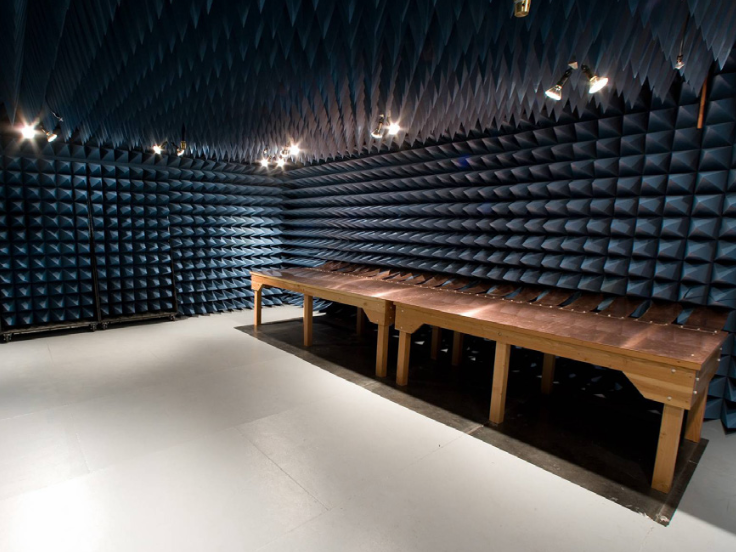
EMC absorber chamber for MIL-STD-461H RS103 testing from 30 to 200 MHz

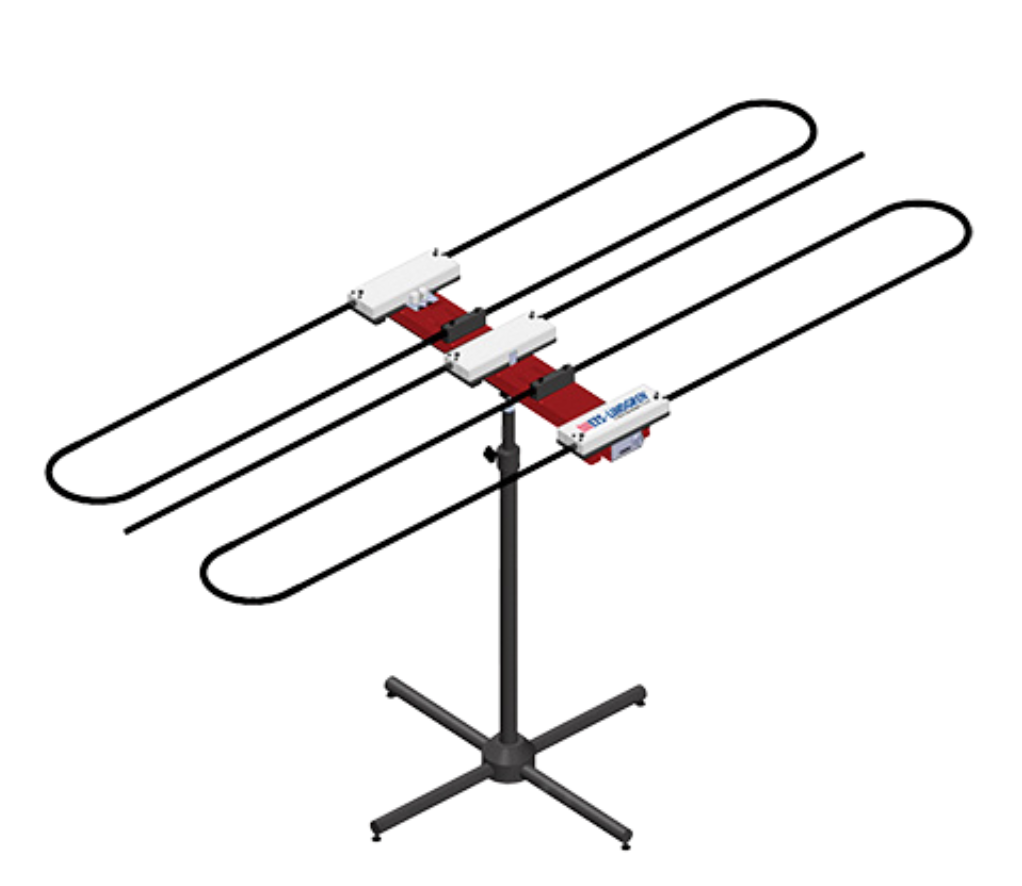
Intell-I-Tune antenna system for 30-200 MHz RS103

The Model 3170 Intell-I-Tune Antenna Solution from ETS-Lindgren was developed for demanding Radiated Susceptibility applications and covers the 30-200 MHz frequency range with a single antenna system.

This eliminates the need for the previously common antenna change between different frequency bands. For EMC laboratories, this is a relevant advantage in terms of setup time, measurement consistency and test throughput.

ETS-Lindgren Model 3170 Intell-I-Tune Antenna Solution for RS103 Radiated Susceptibility testing from 30 to 200 MHz

Key advantages of the ETS-Lindgren 3170

The 3170 addresses the practical challenges of RS103 testing in the lower VHF range through efficient field generation and continuous coverage from 30-200 MHz.

  • One antenna system for 30-200 MHz with no reconfiguration or antenna change required
  • Wide beamwidth, suitable for small to very large EUTs
  • Highly efficient field generation up to 200 V/m with approx. 2,500-3,000 W amplifier power, often less
  • 100 V/m with less than 1,000 W and 50 V/m with under 300 W

These performance values are particularly relevant when defined field strengths must be achieved while keeping amplifier loading under control.

Extended performance features for reproducible results

The Model 3170 provides additional technical characteristics specifically designed to optimize RS103 testing.

  • True resonance tuning across the full 30-200 MHz range
  • Field strengths up to 200 V/m at 1 m distance from the antenna
  • >25 dB harmonic suppression for clean signal quality
  • Low VSWR, typically 1.5:1, for stable system conditions
  • Patented motorized auto-tuning function
  • Fully automated control via TILE! Software

This combination of hardware and software integration can significantly improve throughput, stability and measurement repeatability in daily EMC test operations.

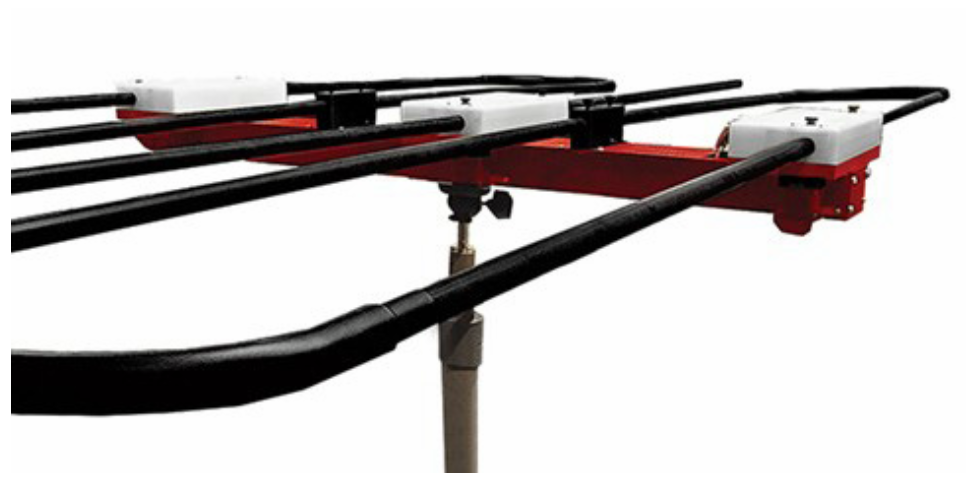
Detailed view of the ETS-Lindgren 3170 antenna with auto-tuning function for reproducible RS103 testing

Selection criteria for RS103 test systems

When assessing an RS103 test environment, laboratories should not look only at isolated specification values. The key question is whether the antenna, amplifier, software and measurement environment can jointly provide the required field strength with sufficient stability and spectral quality.

  • Frequency coverage in the target 30-200 MHz range
  • Achievable field strength in relation to available amplifier power
  • Polarization and mechanical integration into the existing test environment
  • VSWR and amplifier loading across the full frequency range
  • Automation level for repeatable and documentable test sequences
  • Compatibility with existing laboratory processes, to be checked project by project

EMCO supports technical evaluation

EMCO Elektronik is the local contact in the DACH region for ETS-Lindgren solutions and products. When preparing for MIL-STD-461H RS103, EMCO supports customers in technically assessing the requirements and selecting suitable EMC and RF solutions.

For complex RS103 test environments, a system-level view is essential: antenna technology, amplifier power, field generation, software control and laboratory integration must be evaluated together. EMCO contributes EMC and RF application expertise to support technical product selection.